Showing posts with label Pete Seeger. Show all posts
Showing posts with label Pete Seeger. Show all posts
June 13, 2026


May 3, 2026
45 RPMs 106: Mary Hopkin ~ Those Were the Days
~
Credits:

45 RPM record
Today is the birthday of Welsh singer, Mary Hopkin, who bust forth internationally with her wonderful song, Those Were the Days. I was in my early twenties when it did; I remember thinking what a marvelous take on what it must be like to be old and review your life. I danced madly to the bouncy, lively beat of it. I still fondly look back at the song and those early days of my life but now that I am there, I have a totally different perspective on it, my life and my aspirations. As they say, "hindsight is 20/20".
Those Were the Days was composed by Boris Fomin in 1924 but credited to Gene Raskin, who put English lyrics to Fomin's Russian romance song Dorogoi dlinnoyu, which originally had lyrics by the poet Konstantin Podrevsky.
With Raskin's lyrics, the song is an evaluation of youth and romantic
idealism, reminiscing about drinking, singing, and dancing in a tavern,
imagining a rosy future which has not been fulfilled. Although it has a
joyous feeling, it is wistful and, well, a little melancholy. It conveys
the same feeling as the Peggy Lee song, Is That All There Is? I love that song as well. With both I feel, "Then let's keep dancing!"
Hopkin did some backup singing on albums by Tom Paxton, Ralph McTell, David Bowie (Low), Bert Jansch, the Radiators from Space, Thin Lizzy, Carmen, the Sarstedt Brothers, Osibisa, Sparks, Hazel O'Connor and Elaine Paige.
The "B" side of the record is the song Turn, Turn, Turn written by Pete Seeger in 1959. The lyrics – except for the title, which is repeated throughout the
song, and the final two lines – consist of the first eight verses of the third chapter of the biblical Book of Ecclesiastes. The song was originally released in 1962 as To Everything There Is a Season on the folk group the Limeliters' album Folk Matinee, and then some months later on Seeger's own The Bitter and the Sweet album.

Tracklist:
Side 1:
A - Those Were The Days, written by Gene Raskin - 5:05
Side 2:
B - Turn, Turn, Turn, written by Pete Seeger - 2:48
Companies, etc.
Side 1:
A - Those Were The Days, written by Gene Raskin - 5:05
Side 2:
B - Turn, Turn, Turn, written by Pete Seeger - 2:48
Companies, etc.
Mastered At – Capitol Studios, New York City
Pressed By – Capitol Records Pressing Plant, Scranton
Manufactured By – Apple Records, Inc.
Published By – TRO
Published By – Melody Trails, Inc.
Pressed By – Capitol Records Pressing Plant, Scranton
Manufactured By – Apple Records, Inc.
Published By – TRO
Published By – Melody Trails, Inc.
Credits:
Producer – Paul McCartney
Notes:
Scranton Label Variant: "Mfg. by Apple Records, Inc." on 'B Side' label at bottom, and missing from 'A side'.
The reverse Scranton label variant here - Mary Hopkin - Those Were The Days
A: T.R.O. Organization
B: Melody Trails Inc. (BMI)
Runouts have a combination of both stamped and etched characters. "[IAM logo]" is stamped.
Barcode and Other Identifiers
Scranton Label Variant: "Mfg. by Apple Records, Inc." on 'B Side' label at bottom, and missing from 'A side'.
The reverse Scranton label variant here - Mary Hopkin - Those Were The Days
A: T.R.O. Organization
B: Melody Trails Inc. (BMI)
Runouts have a combination of both stamped and etched characters. "[IAM logo]" is stamped.
Barcode and Other Identifiers
Rights Society: BMI
Pressing Plant ID (Stamped in runouts): "IAM" in triangle logo
Matrix / Runout (Label side A): X46416
Matrix / Runout (Label side B): X46417
Matrix / Runout (Runout side A, variant 1): 45-X46416-P1 #2 45-70293-P1 [IAM logo]
Matrix / Runout (Runout side B, variant 1): 45-X46417-P1 45-46417-P1 [IAM logo]
Matrix / Runout (Runout side A, variant 2): 4̶5̶-̶7̶0̶2̶9̶3̶-̶P̶1 45-X46416-P1 #3 [IAM logo]
Matrix / Runout (Runout side B, variant 2): 45-X46417-P1#3 45-46417-P1 [IAM logo]
Matrix / Runout (Runout side A, variant 3): 4̶5̶-̶7̶0̶2̶9̶3̶-̶P̶1 45-X46416-P1 #2 [IAM logo]
Matrix / Runout (Runout side B, variant 3): 45-X46417-P1 [IAM logo] 45-46417-P1
Matrix / Runout (Runout side A, variant 4): 45-̶7̶0̶2̶9̶3̶-̶P̶1 45-X 46416-P1 #4 [IAM logo]
Matrix / Runout (Runout side B, variant 4): 45-4617-T2
Matrix / Runout (Runout side A, variant 5): 45-̶7̶0̶2̶9̶3̶-̶P̶1 45-X 46416-P1 [IAM logo]
Matrix / Runout (Runout side B, variant 5): 45-X46417-P1 45-46417-P1 [IAM logo]
Matrix / Runout (Runout side A, variant 6): 45-̶7̶0̶2̶9̶3̶-̶P̶1 45-X 46416-P1 #8 [IAM logo]
Matrix / Runout (Runout side B, variant 6): 45-X46417-P1 #7 45-46417-P1 [IAM logo]
Matrix / Runout (Runout side A, variant 7): 45-̶7̶0̶2̶9̶3̶-̶P̶1 45-X 46416-P1 #8 [IAM logo]
Matrix / Runout (Runout side B, variant 7): 45-̶7̶0̶2̶9̶4-̶P̶1 46417 45-X-46417-P1
Matrix / Runout (Runout side A, variant 8): 45-46416-T2 [IAM logo]
Matrix / Runout (Runout side B, variant 8): 45-46417-T2 [IAM logo]
Matrix / Runout (Runout side A, variant 9): 45-̶7̶0̶2̶9̶3̶-̶P̶1 45-X 46416-P1 #3 [IAM logo]
Matrix / Runout (Runout side B, variant 9): 45-X46417-P1 #6 45-46417-P1 [IAM logo]
Matrix / Runout (Runout side A, variant 10): 45-7̶0̶2̶9̶3̶-̶P̶1̶ 45-X46416-P1#2 [IAM logo]
Matrix / Runout (Runout side B, variant 10): 45-X46417-P1#5 4̶5̶-̶7̶0̶2̶9̶4̶-P1 [IAM logo]
Matrix / Runout (Runout side A, variant 11): 45-7̶0̶2̶9̶3̶-̶P̶1̶ 45-X46416-P1 [IAM logo]
Matrix / Runout (Runout side B, variant 11): 45-X46417-P1#5 4̶5̶-̶7̶0̶2̶9̶4̶ -P1 [IAM logo]
Pressing Plant ID (Stamped in runouts): "IAM" in triangle logo
Matrix / Runout (Label side A): X46416
Matrix / Runout (Label side B): X46417
Matrix / Runout (Runout side A, variant 1): 45-X46416-P1 #2 45-70293-P1 [IAM logo]
Matrix / Runout (Runout side B, variant 1): 45-X46417-P1 45-46417-P1 [IAM logo]
Matrix / Runout (Runout side A, variant 2): 4̶5̶-̶7̶0̶2̶9̶3̶-̶P̶1 45-X46416-P1 #3 [IAM logo]
Matrix / Runout (Runout side B, variant 2): 45-X46417-P1#3 45-46417-P1 [IAM logo]
Matrix / Runout (Runout side A, variant 3): 4̶5̶-̶7̶0̶2̶9̶3̶-̶P̶1 45-X46416-P1 #2 [IAM logo]
Matrix / Runout (Runout side B, variant 3): 45-X46417-P1 [IAM logo] 45-46417-P1
Matrix / Runout (Runout side A, variant 4): 45-̶7̶0̶2̶9̶3̶-̶P̶1 45-X 46416-P1 #4 [IAM logo]
Matrix / Runout (Runout side B, variant 4): 45-4617-T2
Matrix / Runout (Runout side A, variant 5): 45-̶7̶0̶2̶9̶3̶-̶P̶1 45-X 46416-P1 [IAM logo]
Matrix / Runout (Runout side B, variant 5): 45-X46417-P1 45-46417-P1 [IAM logo]
Matrix / Runout (Runout side A, variant 6): 45-̶7̶0̶2̶9̶3̶-̶P̶1 45-X 46416-P1 #8 [IAM logo]
Matrix / Runout (Runout side B, variant 6): 45-X46417-P1 #7 45-46417-P1 [IAM logo]
Matrix / Runout (Runout side A, variant 7): 45-̶7̶0̶2̶9̶3̶-̶P̶1 45-X 46416-P1 #8 [IAM logo]
Matrix / Runout (Runout side B, variant 7): 45-̶7̶0̶2̶9̶4-̶P̶1 46417 45-X-46417-P1
Matrix / Runout (Runout side A, variant 8): 45-46416-T2 [IAM logo]
Matrix / Runout (Runout side B, variant 8): 45-46417-T2 [IAM logo]
Matrix / Runout (Runout side A, variant 9): 45-̶7̶0̶2̶9̶3̶-̶P̶1 45-X 46416-P1 #3 [IAM logo]
Matrix / Runout (Runout side B, variant 9): 45-X46417-P1 #6 45-46417-P1 [IAM logo]
Matrix / Runout (Runout side A, variant 10): 45-7̶0̶2̶9̶3̶-̶P̶1̶ 45-X46416-P1#2 [IAM logo]
Matrix / Runout (Runout side B, variant 10): 45-X46417-P1#5 4̶5̶-̶7̶0̶2̶9̶4̶-P1 [IAM logo]
Matrix / Runout (Runout side A, variant 11): 45-7̶0̶2̶9̶3̶-̶P̶1̶ 45-X46416-P1 [IAM logo]
Matrix / Runout (Runout side B, variant 11): 45-X46417-P1#5 4̶5̶-̶7̶0̶2̶9̶4̶ -P1 [IAM logo]
Mary Hopkin – Those Were The Days
Label: Apple Records – 1801
Format: Vinyl, 7", 45 RPM, Single, Scranton Pressing
Country: US
Released: Aug 26, 1968
Genre: Rock, Pop, Folk, World, & Country
Style: Chanson, Pop Rock, Folk
Net links:
YouTube links:
Label: Apple Records – 1801
Format: Vinyl, 7", 45 RPM, Single, Scranton Pressing
Country: US
Released: Aug 26, 1968
Genre: Rock, Pop, Folk, World, & Country
Style: Chanson, Pop Rock, Folk
Viewfinder links:
Net links:
YouTube links:
Mary Hopkin ~ Those Were the Days
What the hell! Let's keep dancing!
Styrous® ~ Sunday, April 3, 2026
September 27, 2023
78 RPMs 10: Artie Shaw ~ Nightmare
~

Artie Shaw ~ Nightmare
78 RPM, side 1 label
photo by Styrous®
On September 27, 1938, Artie Shaw recorded Nightmare, a song totally unlike anything he'd ever recorded before. It is a slow, sinister sounding jazz piece that evokes stealth, spies, criminals and other assorted miscreants.
In 1953, Shaw and other prominent figures in the music industry were targeted, including Leonard Bernstein, Aaron Copland, Lena Horne and Pete Seeger, all of whom were named publicly as suspected Communist sympathizers, in the infamous publication Red Channels: The Report of Communist Influence in Radio. Some of them were already being denied employment because of their
political beliefs, history, or association with suspected subversives. Red Channels effectively placed the rest on a blacklist.
Indeed, it was a nightmare!!!!!
Martin Scorsese used Nightmare in his 2004 film, The Aviator which stared Leonardo DiCaprio as Howard Hughes, Cate Blanchett as Katharine Hepburn, and Kate Beckinsale as Ava Gardner.
The video for Nightmare (link below) has a stripper performing a very slow and very sensual fan dance that is PERFECT for the languid tempo of the tune as Shaw oozes and slinks along with his clarinet.

Non-Stop Flight
The "B" side of the record is a typical Shaw jazz tune; Non-Stop Flight is a bouncy, happy tune that makes you want to get up and jitterbug your ass off. Shaw wails away nicely with his clarinet and the backup band,

Artie Shaw ~ Non-Stop Flight
78 RPM, side 2 label
photo by Styrous®
My copy of the record is a repressing on the Bluebird label. Both Nightmare and Non-Stop Flight songs were written by Artie Shaw.
Tracklist:
Side 1:
Side 1:
A - Nightmare
Side 2:
B - Non-Stop Flight
Credits:
Record Company – Radio Corporation Of America
Written By Artie Shaw
Written By Artie Shaw
Notes:
Different label from Artie Shaw And His Orchestra - Nightmare / Non-Stop Flight - missing patent information.
Barcode and Other Identifiers
Matrix / Runout (Side A): B7875A T J5
Matrix / Runout (Side B): B-7875B |) 3 c
Matrix / Runout (Side B): B-7875B |) 3 c
Artie Shaw And His Orchestra – Nightmare / Non-Stop Flight
Label: Bluebird (3) – B-7875
Format: Shellac, 10", 78 RPM, Repress
Country: US
Released:
Genre: Jazz
Style: Big Band
Label: Bluebird (3) – B-7875
Format: Shellac, 10", 78 RPM, Repress
Country: US
Released:
Genre: Jazz
Style: Big Band
Viewfinder links:
Net links:
Jazz Standards ~ Artie Shaw
National Endowment for the Arts ~ Artie Shaw
YouTube links:
"In the world we live in, compulsive perfectionists finish last"
~ Artie Shaw
Styrous® ~ Wednesday, September 27, 2023
~
February 7, 2021
Oscar Brand ~ A man of varied tastes
~
 Oscar Brand - ca. late 70’s - early 80’s


He wrote the lyrics to the song A Guy is a Guy, which was recorded by Ella Fitzgerald in 1951 and became a hit for Doris Day in (1952). His score for the 1968 Off-Broadway show, How to Steal An Election sent up the current belief that charisma would help a candidate win. You think? 
Styrous® ~ Sunday, February 7, 2021

Today is the birthday of Oscar Brand, a Canadian-born American folk
singer-songwriter and author with a career spanning 70 years. He
composed at least 300 songs and released nearly 100 albums, among them
Canadian and American patriotic songs. Brand's music ran the gamut from novelty songs to serious social commentary and spanned a number of genres from folk music to Doris Day to Ella Fitzgerald.
His
music was not for everyone. You had to be a person who loved the rich
variety of the music traditions, history, language and sounds of
different cultures and countries from Appalachia to Zimbabwe. He was known for composing catchy and themed folk songs.
Brand also wrote a number of short stories. And for 70 years, he was the host of a weekly folk music show on WNYC Radio in New York City, which is credited as the longest running radio show with only one host in broadcasting history.

Oscar Brand - 1960
photographer unknown
He hosted the radio show Oscar Brand's Folksong Festival on Saturdays at 10:00 p.m. on WNYC-AM
820 in New York City,
which ran into its 70th year. The show ran more
or less continuously since its debut on December 10, 1945, making it the
longest-running radio show with the same host, according to the Guinness Book of World Records. Over its run it introduced such talents to the world as Bob Dylan, Joan Baez, Woody Guthrie, Arlo Guthrie, Huddie Ledbetter, Joni Mitchell, Peter, Paul & Mary, Judy Collins, the Kingston Trio, Pete Seeger and the Weavers. In order to make sure that his radio program could not be censored he refused to be paid by WNYC for the next 70 years.

date & photographer unknown
He played with such legends of folk music as Lead Belly, Woody Guthrie, Josh White, Jean Ritchie, the Weavers and Pete Seeger. He wrote various books on the folk song and folk song collections, including The Ballad Mongers: Rise of the American Folk Song, Songs Of '76: A Folksinger's History Of The Revolution and Bawdy Songs & Backroom Ballads, the latter comprising four volumes (link below).


date & photographer unknown
Oscar Brand was born to a Jewish family in Winnipeg, Manitoba, Canada.
His father was a Romanian-born flooring contractor, Isidore Brand. His
mother was named Beatrice. In 1927, the family moved to Minneapolis,
then to Chicago and ultimately to New York City. As a young man, Brand lived in Borough Park, Brooklyn and graduated from Erasmus Hall High School and later from Brooklyn College with a BS in psychology.
Although Brand was anti-Stalinist and was never a member of any Communist party, the House Committee on Un-American Activities referred to his show as a "pipeline of communism", because of his belief in the rights under the First Amendment of blacklisted artists to have a platform to reach the public. Accordingly, in June 1950, Brand was named in the premier issue of Red Channels as a Communist sympathizer, along with Paul Robeson, Josh White and Pete Seeger. A few years before Mr. Brand was targeted by Red Channels, he had been accused of playing Nazi music by Mayor Fiorello H. La Guardia, whose third and last term was ending around the time Brand’s radio career was beginning. Called to the mayor’s office, Brand explained that the German songs he had played were actually centuries old. As pleased as the mayor was to hear that Nazis had not infiltrated the
municipal radio station, he was even more delighted to learn that Mr.
Brand worked without pay.
While Brand was not as well-known or radical an activist as some
of his contemporaries, he was a long-standing supporter of civil rights.
He told stories of buying food for Leadbelly when the two traveled
together in segregated areas, and participated in the 1965 Selma to Montgomery marches.
Brand was given the Peabody Award for broadcast excellence in 1982 for his broadcast The Sunday Show on National Public Radio, and was awarded the Personal Peabody Award in 1995 which he shared with Oprah Winfrey.
On February 7, 2010, CBC Radio Sunday Edition celebrated Brand's life on the occasion of his 90th birthday.
Oscar Brand died of pneumonia on September 30, 2016, at his home in Great Neck, New York. He was 96 years old.
On June 25, 2019, The New York Times Magazine listed Brand among hundreds of artists whose material was reportedly destroyed in the 2008 Universal fire (link below).
Viewfinder links:
Net links:
Billboard ~ Oscar Brand, 'Radio Host, Dies at 96
NY Times ~ Oscar Brand, Folk Singer, Dies at 96
Vintage Music FM ~ Oscar Brand
Washington Post ~ Oscar Brand, folk troubadour, dies at 96
WNYC ~ Oscar Brand YouTube links:
Oscar Brand ~ Bawdy Songs
Doris Day ~ A Guy is A Guy
Ella Fitzgerald ~ A Guy is A Guy
MAIN MENU - Blog Articles
~
~
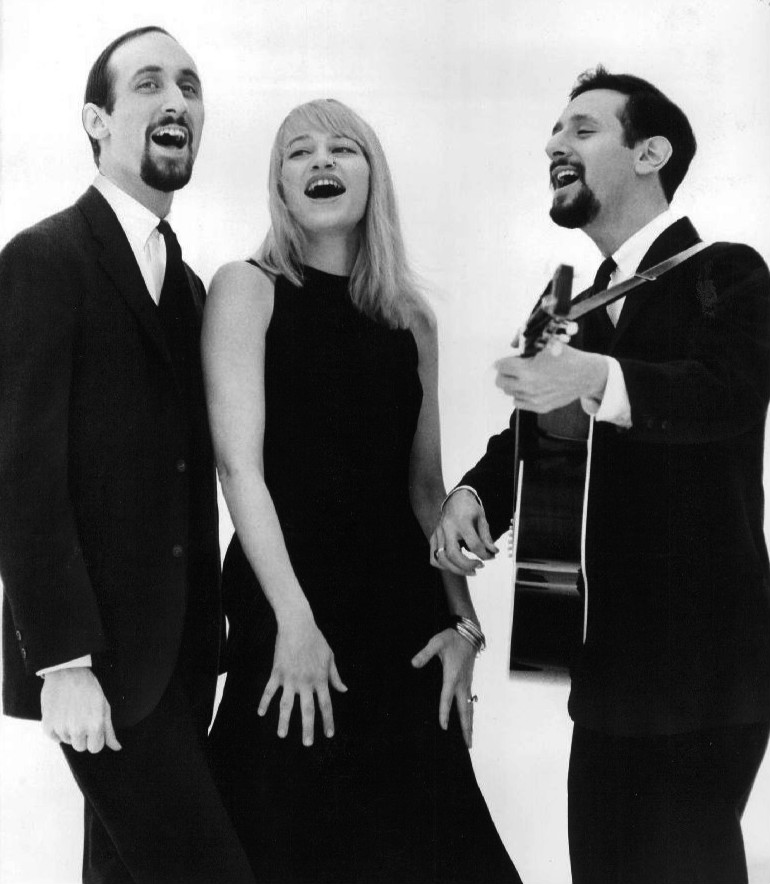
Peter, Paul & Mary articles/mentions
December 20, 2018
David Gahr ~ music world photographer
~

Joan Baez
Johnny Cash
Judy Collins
Salvador Dalí
Miles Davis
Janis Joplin
John Lennon
Pete Seeger
The United States postal music stamps ~ the "Forevers" Pt 3
David Gahr photography studio and archives

David Gahr - 1964
photo by John Byrne Cooke
David Gahr (born September 18, 1922) was an American photographer. He was one of the pre-eminent photographers of American folk, blues, jazz and rock musicians of the 1960s.
His photographic output includes more than five decades of musicians like Phil Spector, Bob Dylan, Miles Davis, Bruce Springsteen, Van Morrison, Janis Joplin, Sonny Terry, John Lennon and Pete Seeger, among others. His book, The Face of Folk Music (Citadel Press, 1968) with writer Robert Shelton captured the exploding American Folk music scene, with hundreds of images including Dylan, Joan Baez, Pete Seeger, Judy Collins, Tom Paxton, Phil Ochs, Odetta, Buddy Guy and Junior Wells, Mary Travers and Johnny Cash, among others.
The iconic photo by Gahr of Miles Davis playing his trumpet in his undershirt was used on the Davis 1971 reissue album, A Tribute To Jack Johnson, the soundtrack for the Bill Cayton documentary, on the life of boxer Jack Johnson. The photo was also used by the United States Postal Service for one of their music "Forever" stamps (link below).
He did not limit himself to music and musicians; he shot assignments for Time and Life magazines. He photographed Robert Rauschenberg, Jasper Johns, Claes Oldenburg, Salvador Dalí, Willem de Kooning and Georgia O’Keeffe. He took book-jacket photos of John Cheever and Arthur Miller.
He did not limit himself to music and musicians; he shot assignments for Time and Life magazines. He photographed Robert Rauschenberg, Jasper Johns, Claes Oldenburg, Salvador Dalí, Willem de Kooning and Georgia O’Keeffe. He took book-jacket photos of John Cheever and Arthur Miller.
Gahr died in Brooklyn, New York on May 25, 2008; he was 85 years old.
His daughter, Carla Gahr, also a
photographer, managed the David Gahr archives.
Viewfinder links:
Johnny Cash
Judy Collins
Salvador Dalí
Miles Davis
Janis Joplin
John Lennon
Pete Seeger
The United States postal music stamps ~ the "Forevers" Pt 3
Net links:
Morrison Hotel Gallery ~ David Gahr
Styrous® ~ Thursday, December 20, 2018
August 25, 2018
20,000 Vinyl LPs 145: Leonard Bernstein ~ Trouble In Tahiti

August 25, 1918
~
October 14, 1990
Leonard Bernstein was born one hundred years ago on August 25, 1918. As it is the centennial of his birth, there will be thousands of memorials to him; this is one of them.
He was an American composer, conductor, author, music lecturer, and pianist. He was among the first conductors born and educated in the US to receive worldwide acclaim. According to music critic Donal Henahan, he was "one of the most prodigiously talented and successful musicians in American history."

Bernstein conducting a rehearsal in one
of the Tanglewood barns, ca 1971
(Photograph by Heinz Weissenstein,
Whitestone Photo, BSO Archives)
For my tribute to Bernstein, I've selected a beautiful, very small and almost unknown gem of an opera he wrote in 1952, his first, Trouble in Tahiti. I have loved it since I first heard this 1953 recording in the late fifties. It is a one-act opera in seven scenes composed by Bernstein with an English libretto by him; he dedicated the opera to Marc Blitzstein. There is a superb video of a complete performance of the opera by the English group, Opera North, on YouTube (link below) that is well worth the time (51 minutes) to watch.

Tihiti is the darkest of his "musicals", and the only one for which he wrote the words as well as the music. The opera received its first performance on June 12, 1952 at the Bernstein Festival of the Creative Arts on the campus of Brandeis University in Waltham, Massachusetts to an audience of nearly 3,000 people.

During the post–World War II economic expansion of the late 1940s and the 1950s, many persons from rural and urban backgrounds moved to single-family detached homes in the suburbs or in "horizontally developed cities".

The early to middle fifties was a time when it was dawning on people that Suburbia and the suburban "Leave It To Beaver" existence was not what it was all cracked up to be. It was a time of transition from a major world power and prestige to something a bit less that lead to the disillusionment of the sixties.

Trouble predates the 1956 book by John Keats, The Crack In the Picture Window. It was not uncommon for some of these homes to have a picture window, in contrast to the smaller sash windows typical of urban and rural housing; although many of these new suburban homes did not necessarily have picture windows, Keats in his title used the term to characterize this new housing in general, and by extension the new social forms arising from this change in how people housed themselves (as well as other social changes of the time).
It also predates the song by Malvina Reynolds, Little Boxes, which was a big hit for Pete Seeger in 1963. The song is a political satire about the development of suburbia, and associated conformist middle-class attitudes. The effectiveness of the satire was attested to by a university professor quoted in 1964 in Time magazine as saying, "I've been lecturing my classes about middle-class conformity for a whole semester. Here's a song that says it all in 1½ minutes." However, according to Christopher Hitchens, satirist Tom Lehrer described Little Boxes as "the most sanctimonious song ever written".

vinyl LP, back cover detail
detail photo by Styrous®
Tihiti is the darkest of his "musicals", and the only one for which he wrote the words as well as the music. The opera received its first performance on June 12, 1952 at the Bernstein Festival of the Creative Arts on the campus of Brandeis University in Waltham, Massachusetts to an audience of nearly 3,000 people.


Aerial view of Levittown, Pennsylvania
photographer unknown
The early to middle fifties was a time when it was dawning on people that Suburbia and the suburban "Leave It To Beaver" existence was not what it was all cracked up to be. It was a time of transition from a major world power and prestige to something a bit less that lead to the disillusionment of the sixties.

vinyl LP, front cover detail
detail photo by Styrous®
Trouble predates the 1956 book by John Keats, The Crack In the Picture Window. It was not uncommon for some of these homes to have a picture window, in contrast to the smaller sash windows typical of urban and rural housing; although many of these new suburban homes did not necessarily have picture windows, Keats in his title used the term to characterize this new housing in general, and by extension the new social forms arising from this change in how people housed themselves (as well as other social changes of the time).
It also predates the song by Malvina Reynolds, Little Boxes, which was a big hit for Pete Seeger in 1963. The song is a political satire about the development of suburbia, and associated conformist middle-class attitudes. The effectiveness of the satire was attested to by a university professor quoted in 1964 in Time magazine as saying, "I've been lecturing my classes about middle-class conformity for a whole semester. Here's a song that says it all in 1½ minutes." However, according to Christopher Hitchens, satirist Tom Lehrer described Little Boxes as "the most sanctimonious song ever written".

Trouble in Tahiti is the story of a disintegrating middle-class suburban marriage and it was startling that it appeared at that prosperous time in the history of the US.
The opera is performed with minimal scenery (although
Bernstein gave detailed instructions for drops and props) and very
simple costumes. There are only two soloists, a married couple named Sam (baritone)
David Atkinson, and Dinah (mezzo-soprano), Beverly Wolff. Their son, Junior, is referred to but is never seen or
heard (however, the video version I've linked to below does have a "Junior"). Other characters are addressed in certain scenes but also are
never seen or heard: Sam's client Mr Partridge (on the telephone); his
friend Bill (present and interacting with Sam but intended to be
invisible); his secretary Miss Brown (present but intended to be
invisible); Dinah's psychoanalyst ("invisible"); her milliner ("imaginary").

The plot is of one day in the life of these desperately unhappy, though
married people, lonely, longing for love, and unable to communicate. It is is about emotional isolation in the suburbs. This is a couple that has everything they could ever need; but they have lost themselves and one another.
A trio, two men and a woman, perform the function of the "Greek Chorus" throughout the opera, happily but cynically extolling the virtues of Suberbia and Sam, the hopeless frustration of Dinah and helps propel the action. They open with: Daa/Daa, Day, a delightful, bouncing diddy that blissfully extolls the joys of suburban life with the innocence of the above mentioned Leave It To Beaver but there is an underlying current with a bite to it (link to lyrics & music below).
We're taken to Sam's day at the bank in his office where we see his shallow dealings with his clients; the trio sings of his "marvelous/generous" handling of them.
In one scene, Dinah tells her psychiatrist about a dream she had, There Is a Garden (13 minutes into the complete version below). In the dream, she is in a dead garden but a voice tells her there is another one filled with "love, harmony, and grace." She tries to find the voice, but every step she takes is filled with terror and horrible things. Finally, she finds the owner of the voice, but when she touches his hand, he vanishes and she wakes. The aria is one of the most brilliant works in modern opera as it fluctuates between moments of agonizing emotional turmoil and incredibly beautiful melody (link below). To me it is the highlight of the opera. It is magnificent!
We're taken to Sam's day at the bank in his office where we see his shallow dealings with his clients; the trio sings of his "marvelous/generous" handling of them.
In one scene, Dinah tells her psychiatrist about a dream she had, There Is a Garden (13 minutes into the complete version below). In the dream, she is in a dead garden but a voice tells her there is another one filled with "love, harmony, and grace." She tries to find the voice, but every step she takes is filled with terror and horrible things. Finally, she finds the owner of the voice, but when she touches his hand, he vanishes and she wakes. The aria is one of the most brilliant works in modern opera as it fluctuates between moments of agonizing emotional turmoil and incredibly beautiful melody (link below). To me it is the highlight of the opera. It is magnificent!
After her appointment, Sam and Dinah accidentally encounter each other on the street, Well, of all people Duet (link Below), a variation on the Garden motif, but end up walking off in opposite directions. It is a sad and grim encounter.

vinyl LP, front cover detail
detail photo by Styrous®
At the gym, Sam sings about the natural superiority of some men, There's a Law, and how they "always will win" while the rest are just losers; he, of course, is one of the winners. He sings about physical superiority but you know he is referring to superiority on other levels (link below).
Dinah goes to see a movie, Trouble in Tahiti,
from which the title of the opera is derived, and is a metaphor for
what is happening in her life but she does not acknowledge this. Afterwards, at the milliner, Dinah sings about the sillyness of the film, What a Movie; it is a rollicking, silly and delightful segement but at the end in her heart she must know it strikes too close to home (link below).
At the end of the opera, Sam and Dinah show a willingness to sacrifice for each other, out of commitment to the marriage, but there seems to be no joy in it.
The theme of modern familial disillusionment was revisited by Bernstein years later in 1983 with his sequal to Trouble, A Quiet Place (link below), with a libretto by Stephen Wadsworth. It tells the story of a contemporary American family struggling to connect, forgive, and accept one another's differences.


At the end of the opera, Sam and Dinah show a willingness to sacrifice for each other, out of commitment to the marriage, but there seems to be no joy in it.
The theme of modern familial disillusionment was revisited by Bernstein years later in 1983 with his sequal to Trouble, A Quiet Place (link below), with a libretto by Stephen Wadsworth. It tells the story of a contemporary American family struggling to connect, forgive, and accept one another's differences.

vinyl LP, side 1
photo by Styrous®

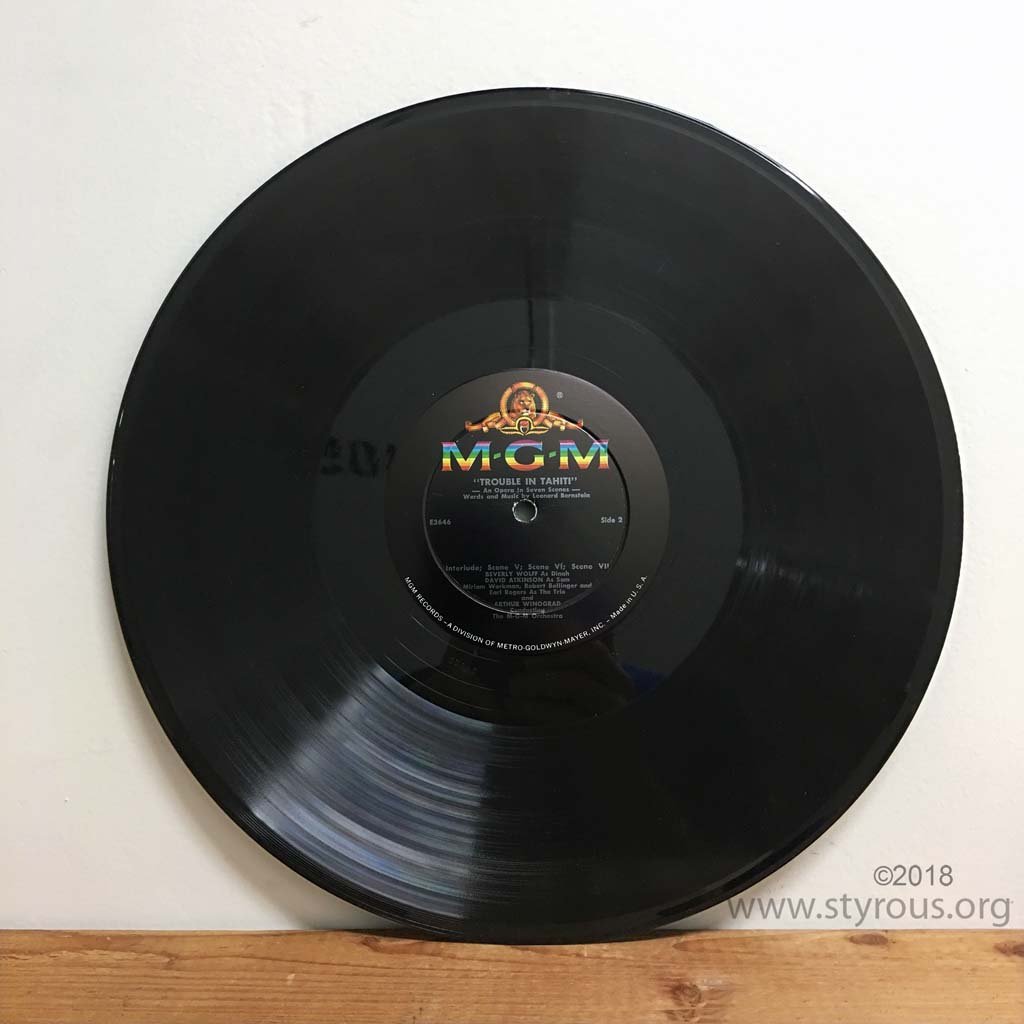
vinyl LP, side 2
photo by Styrous®

Tracklist:
Side 1:
A1 Prelude
A2 Scene I
A3 Scene II
A4 Scene III
A5 Scene IV
Side 2:
B1 Interlude
B2 Scene V
B3 Scene VI
B4 Scene VII
Credits:
Composed By – Leonard Bernstein
Conductor – Arthur Winograd
Orchestra – The M-G-M Orchestra*
Vocals [Dinah, A Suburban Wife In Her Early Thirties] – Beverly Wolff
Vocals [Sam, Her Husband, Same Age] – David Atkinson
Vocals [The Trio, A Greek Chorus Born Of The Radio Commercial] – Earl Rogers, Miriam Workman, Robert Bollinger
Beverly Wolff, David Atkinson, The M-G-M Orchestra*, Arthur Winograd, Miriam Workman, Robert Bollinger, Earl Rogers – Leonard Bernstein's Trouble In Tahiti (An Opera In Seven Scenes)
Label: MGM Records – E3646
Format: vinyl LP
Country: US
Released: 1953
Genre: Classical, Stage & Screen
Style: Opera, Musical
Side 1:
A1 Prelude
A2 Scene I
A3 Scene II
A4 Scene III
A5 Scene IV
Side 2:
B1 Interlude
B2 Scene V
B3 Scene VI
B4 Scene VII
Credits:
Composed By – Leonard Bernstein
Conductor – Arthur Winograd
Orchestra – The M-G-M Orchestra*
Vocals [Dinah, A Suburban Wife In Her Early Thirties] – Beverly Wolff
Vocals [Sam, Her Husband, Same Age] – David Atkinson
Vocals [The Trio, A Greek Chorus Born Of The Radio Commercial] – Earl Rogers, Miriam Workman, Robert Bollinger
Beverly Wolff, David Atkinson, The M-G-M Orchestra*, Arthur Winograd, Miriam Workman, Robert Bollinger, Earl Rogers – Leonard Bernstein's Trouble In Tahiti (An Opera In Seven Scenes)
Label: MGM Records – E3646
Format: vinyl LP
Country: US
Released: 1953
Genre: Classical, Stage & Screen
Style: Opera, Musical
Viewfinder links:
Net links:
Leonard Berstein ~ Trouble In Tahiti
NYTimes ~ Bernstein's Trouble in Tahiti
YouTube links:
Trouble In Tahiti (complete - 51:04)
The Girl Choir of South Florida ~ There Is a Garden Trouble in Tahiti ~ Quirijn de Lang interview
Leonard Bernstein on A Quiet Place

Styrous® ~ Saturday, August 25, 2018
Subscribe to:
Posts (Atom)