Showing posts with label Howdy Doody. Show all posts

October 3, 2025

Captain Kangaroo on the small screen

 ~    

Bob Keeshan & Bunny Rabbit      


Seventy years ago today, on Monday, October 3, 1955, the television series, Captain Kangaroo premiered on the American television network CBS.        


The show was conceived by Bob Keeshan, who also played the title character "Captain Kangaroo", and who based the show on "the warm relationship between grandparents and children". Keeshan had portrayed the original Clarabell the Clown on the NBC The Howdy Doody Show (link below) during the network's early years.          
 
I was familiar with the show because I had to baby sit my brothers who liked to watch all the kid shows in the early fifties; Howdy Doody, The Mickey Mouse ClubKukla, Fran and Ollie, etc. 
 
 
Fran AllisonKukla, Fran and Ollie
 
 
I hated them with the exception of two kid's shows, Tom Corbett, Space Cadet and Captain Video and His Video Rangers (no surprise there) but it was the only way to keep them quiet, so, I got to learn all the different characters in each of them.                
       
His name "kangaroo" came from the big pockets in his famous blue coat (at the time I didn't know the color because it was black & white TV). Keeshan was only 27 years old when he created the kangaroo persona; he would perform storytelling, meet guests, and engage in silly stunts with regular characters, both humans and puppets. He performed as the Captain more than 9,000 times over the nearly 30-year span of the show.       
       
Captain Kangaroo was the longest running American children's television show until 1997 when it was surpassed by Mister Rogers' Neighborhood, which itself was surpassed by Sesame Street in 2003
 
Captain Kangaroo is still the longest running children's TV series by episode count with 6,090. When one counts the 65 edited versions (severely altered re-runs) that aired on PBS the episode count goes up to 6,155. Second-place holder Sesame Street has aired 4,731 episodes till now.
       
        
w/Nipsey Russell - 1971 
press photo 
 
 
Keeshan once offered a stern rebuke to parents at the time. “I am so often asked: ‘How do I get my children to read?’ Well, your children are coming home and watching you watch television,” he observed. “You are the role model for your children. If you want them to read, try picking up a book once in a while.”         
 
Captain Kangaroo was referenced in one of my favorite songs, Flowers On the Wall by The Statler Brothers in 1965.  
  
 
with Bruce Jenner in 1978 
CBS press photo 
 
 
Keeshan teamed up with former Texas governor Lamar Alexander to launch Corporate Family Solutions in 1987. The company operated workplace childcare centers for companies including Sears, Toyota, and Turner Broadcasting, the Los Angeles Times reported in 1997.   
         
 
Bob Keeshan & crew
        
 
Keeshan moved to Vermont in 1990 and made a home for himself in the town of Norwich. And later that decade came the publication of children’s books Keeshan wrote, including 1996’s Hurry, Murray, Hurry! and Alligator in the Basement, and 1997’s Itty Bitty Kitty and Itty Bitty Kitty Makes a Big Splash.       
 
Keeshan died on January 23, 2004, at age 76, with his family saying in a statement the cause of death was a “long illness,            


Viewfinder links:        
         
Fran Allison             
Howdy Doody              
Bruce Jenner             
Tales of Tomorrow        
        
Net links:        
         
TV Insider ~ What Happened to Bob Keeshan After the Show Ended?                   
        
YouTube links:        
        
Captain Kangaroo Show Opening                  
Captain Video and His Video Rangers (show intro)             
The History Guy ~ Good Morning, Captain                
Puffin' Billy (Captain Kangaroo theme)         
The Statler Brothers ~ Flowers On the Wall          
The Statler Brothers ~ Flowers On the Wall (live)         
Tom Corbett, Space Cadet (1950) (8 videos)          


August 22, 2021

Howdy Doody articles/mentions

 ~    
       
mentions:       


Howdy Doody        
created by Frank Paris       


August 20, 2021

August 19, 2021

Philo T. Farnsworth ~ Nuclear Fusion & Captain Kangaroo

  ~        
Philo T. Farnsworth with TV statue
 
Today is the birthday of Philo Taylor Farnsworth. I can just hear you say, “Who the hell is Philo Farnsworth?” Ok, I’ll tell you. He is the father of what we now call The Television! His invention ushered in a new way of living as well as many characters that everyone came to love, the loveable Howdy Doody . . .
 

Howdy Doody -1947 - 1960


. . . Ed Sullivan . . . 
 

Ed Sullivan Show - 1948 - 1971 


, , ,  Desi and Lucy, . . . 
 
 
 I Love Lucy - 1951 -1957


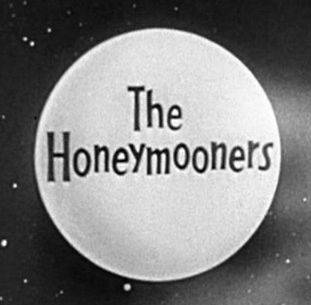
The Honeymooners - 1955 - 1956  


. . . and, of course, Captain Kangaroo.    
 
 
 From left: Dancing Bear, Bunny Rabbit,
Grandfather Clock, Mister Moose
 
 
Farnsworth is best known for his 1927 invention of the first fully functional and complete all-electronic television system complete with receiver and camera—which he produced commercially through the Farnsworth Television and Radio Corporation from 1938 to 1951, in Fort Wayne, Indiana.        
 
 
Philo T. Farnsworth - 1928
 Bettmann Archives/Getty Images
 

However, he invented the tube in his laboratory at the foot of Telegraph Hill (link below), right here in San Francisco, California
 
 
Plaque at the location of Farnsworth's 
San Francisco laboratory on Green Street 
photo by Adam Kliczek
 
 
I almost met him but we missed each other by 35 years; he was in his studio in the late twenties and I got there in the early sixties (Wilder link below). Timing is everything!   
 
 
Farnsworth’s 202 Green Street lab - San Francisco
Philo T. Farnsworth Archives


In his later life, Farnsworth invented a small nuclear fusion device, the Farnsworth–Hirsch fusor, employing inertial electrostatic confinement (IEC). The design of this device has been the inspiration for other fusion approaches, including the Polywell reactor concept. Farnsworth held 300 patents, mostly in radio and television.        
         
Farnsworth was born in a small log cabin that was built by his granfather in Indian Springs near Beaver, Utah.     
 
 
log cabin 
Indian Springs ~ Beaver, Utah.    
 
 
When he was a kid he began tinkering with machines and developed an early interest in electronics after his first telephone conversation with a relative and after he discovered a large cache of technology magazines in the attic of a house they moved into. He won $25 in a pulp-magazine contest for inventing a magnetized car lock.      
 
Farnsworth conceived of the idea for electronic television at the age of 14 while working on a farm. He observed the straight rows created by the horses as he plowed, and thought “he could build the image like a page of print and paint the image line after line . . . with the speed of the electron, this could be done so rapidly the eye would view it as a solid picture.”

According to his wife Pem, Farnsworth reasoned that by using an image dissector tube, he could manipulate electrons to “change a visual image into a stream of electrical current, transmit that to another vacuum tube at the receiver, and on a fluorescent screen turn the current back into the visual image again.” Farnsworth sketched his idea on the blackboard of his high school chemistry teacher, Justin Tolman, and presented him with a drawing of it, which would prove invaluable years later during a 1935 patent suit ruling.    


Farnsworth’s sketch for Justin Tolman 

 
When his family moved to Salt Lake City he became acquainted with Leslie Gorrell and George Everson, a pair of San Francisco philanthropists, They agreed to fund his early television research with an initial $6,000 in backing, and set up a laboratory in Los Angeles for Farnsworth to carry out his experiments. In 1974, Everson wrote a book, The Story of Television; The Life of Philo T. Farnsworth
 
In 1926 he and his wife, Elma "Pem" Gardner, rented a house at 2910 Derby Street in Berkeley. He applied for his first television patent, which was granted on August 26, 1930. By that time they had moved across the bay to San Francisco, where Farnsworth set up his new lab at 202 Green Street.         
 
Many inventors had built electromechanical television systems before his seminal contribution, but Farnsworth designed and built the world's first working all-electronic television system, employing electronic scanning in both the pickup and display devices. He first demonstrated his system to the press on September 3, 1928, and to the public at the Franklin Institute in Philadelphia on August 25, 1934.   


From the 1950s until his death, his major interest was nuclear fusion. In 1965 he patented an array of tubes, called "fusors," that produced a 30-second fusion reaction.   

Philo T. Farnsworth died in Salt Lake City, Utah, of pneumonia on March 11, 1971, before he could complete his fusion work. He was 64 years old.       

Farnsworth's wife, Pem, fought for decades after his death to assure his place in history. Farnsworth always gave her equal credit for creating television, saying, "my wife and I started this TV." She died on April 27, 2006, at age 98.      
    
 
Farnsworth Television Model - 1936 
 
 
The "Farnsworth Steps" in San Francisco are named after him; they lead from Willard Street (just above Parnassus) up to Edgewood Avenue.         


Farnsworth Steps, San Francisco - 2021 
photo by Styrous®


Viewfinder links:           
           
Desi Arnaz          
Lucille Ball             
Hugh Brannum         
Philo T. Farnsworth           
Jackie Gleason          
Howdy Doody         
Bob Keeshan          
Audrey Meadows          
Ed Sullivan           
           
Net links:           
          
Arizona Archives ~ Farnsworth and Everson Papers - 1914 -1999     
Indiana History ~   
         “THE DAMNED THING WORKS!”           
          The Father of Television Part II     
Cohesion Arts ~ Philo in the Hall of Fame          
Sound & Communications ~ Farnsworth, The Father Of TV       
          
YouTube links:           
           
Captain Kangaroo         
The Honeymooners           
I Love Lucy        


Styrous® ~ Thrusday, August 19. 2021        


November 27, 2020

20,000 vinyl LPs 255: Howdy Doody & Buffalo Bob Smith ~ It's Howdy Doody Time!

 ~        


"Buffalo" Bob Smith ~
 It's Howdy Doody Time!


Today, November 27, is the birthday of "Buffalo" Bob Smith who was born in 1917, in Buffalo, New York as Robert Emil Schmidt. Who was "Buffalo" Bob? He was the side kick of Howdy Doody! Who was Howdy Doody? He was a puppet on a children's television program entitled the Howdy Doody Show which ran from 1947 until 1960!               
 
 
date & photographer inknown
 
 
How do I know about "Buffalo" Bob and Howdy Doody? In my teens my two brothers, Steve and John were 10 and 9 years younger than I and I had to baby sit them while my dad and mom worked. I would plop them down in front of the TV (although the show was broadcast in color we only had a black and white TV) to keep them quiet and under control but I had to more or less stay with them so they didn't get into trouble. That meant I had to watch the shows they watched. Needless to say, as a teenager, I hated each and every show.      
 
 
vinyl LP front cover 
photo of album cover by Styrous®
 
So, even though I intensely hated It's Howdy Doody Time!, every single detail of it was irrevocably and forever burned in my mind! I'd think to myself, if I heard the theme song (links below) one more time, I'd go insane! Ugh! Perhaps posting this article will purge them from it!     
 

It's Howdy Doody Time! 
vinyl LP front cover detail
detail photo of album cover by Styrous®
 
 
It was one of the first children's programs to make it big on television, it was a mix of comedy, music and audience participation. There were several characters that appeared from time to time. Clarabell the Clown, a mime who used a bicycle horn, was a regular played by Bob Keeshan, who went on to create the children's TV character Captain Kangaroo. The role was taken over by jazz musician Lew Anderson who closed the last episode of the show (links below).  
 
 
date & photographer unknown


date & photographer unknown

 
The American-Indian character was played by San Rafael "native", Bill LeCornec who portrayed Chief Thundercloud (not to be confused with the Lone Ranger actor who portrayed Tonto). Thundercloud was Head of the Ooragnak (kangaroo spelled backward) tribe of American-Indians and the originator of the nonsense word "Cowabunga" (the ONE thing about the show I liked) which was picked up a decade later by surfer dudes who probably watched Howdy Doody when they were kids. Thirty years after them, the Teenage Mutant Ninja Turtles latched on to the word. Language can be strange but fun.      
 
 
Bill LeCornec as Chief Thundercloud
date & photographer unknown


There were puppet characters other than Howdy Doody as well. Phineas T. Bluster was a stingy old man who was always pontificating about something and his last name said it all.     


Phineas T. Bluster 
date & photographer unknown

 
Princess Summerfall Winterspring was portrayed by Judy Tyler who would go on to perform in the Rodgers and Hammerstein musical Pipe Dream, based on the John Steinbeck short novel, Sweet Thursday, and appeared in the 1957 film Jailhouse Rock with Elvis Presley.      
 
One puppet I thought was cool (the term was beginning to happen) was Sandra the Witch. There was something exotic and enticing about her; perhaps it was just my brand new hormones running amuck.   


Some of the Gang
 
"Buffalo" Bob Smith, Howdy Doody, Phineas T. Bluster & Clarabell the Clown,      


vinyl LP back cover detail
photo by Styrous®

 
There would be various guests that appeared on the show from time to time. Ron Howard (of Happy Days fame and later a film producer) was a guest in a 1975 special.       


photographer unknown


Spike Jones was another guest


Buffalo Bob Smith created Howdy Doody during his days as a radio announcer on WNBC. At that time, Howdy Doody was only a voice Smith performed on the radio. When Smith made an appearance on NBC's television program Puppet Playhouse on December 27, 1947, the reception for the character was great enough to begin a demand for a visual character for television. Frank Paris, a puppeteer whose puppets appeared on the program, was asked to create a Howdy Doody puppet.


vinyl LP back cover detail
photo by Styrous®


Bob Smith, the show's host, was dubbed "Buffalo Bob" early in the show's run (a reference both to the historical American frontier character Buffalo Bill and Smith's hometown of Buffalo, N.Y.). At first the set was supposed to be a circus tent, but soon was changed to a western town. Smith wore cowboy garb, as did the puppet. The name of the puppet "star" was derived from the American expression "howdy doody"/"howdy do," a commonplace corruption of the phrase "How do you do?" used in the western United States.          


It's Howdy Doody Time! 
vinyl LP back cover detail
photo by Styrous®


The major feature of the Howdy Doody show was the Peanut Gallery, onstage bleachers that sat about forty or fifty children.       


date & photographer unknown

 
Each show began with Buffalo Bob asking, "Say kids, what time is it?" and the kids yelling in unison, "It's Howdy Doody Time!" Then the kids sang the show's theme song (set to the tune of "Ta-ra-ra Boom-de-ay"):      
 
It's Howdy Doody time,
Bob Smith and Howdy, too,
Say "Howdy do" to you.
Let's give a rousing cheer
’Cause Howdy Doody's here.
It's time to start the show
So kids, let's go!
 
The popularity of Howdy Doody and its Peanut Gallery led executives at United Features Syndicate to use the name Peanuts for syndication of the Charles M. Schulz Li'l Folks comic strip, reportedly to the lifelong chagrin of Schulz.        

In June and July of 1954, "Buffalo" Bob Smith and Howdy Doody appeared on the cover of TV Guide Magazine.         
 
 
TV Guide cover - 1954


It's Howdy Doody Time! 
vinyl LP back cover detail
photo by Styrous®


Well, writing about Howdy Doody didn't purge it from my mind but it did generate some nostalgia for those days I spent with my brothers when they were little kids in the fifties!      
 
The Howdy Doody show was in hour segments and for the last episode, Clarabell the Clown surprised everyone at the very end (link below)!      


It's Howdy Doody Time! 
vinyl LP label, side 1
photo by Styrous®


It's Howdy Doody Time! 
vinyl LP label, side 2
photo by Styrous®
  
Tracklist:

Side 1:

A1 - It's Howdy Doody Time - 7:14
A2 - Howdy Doody's Do's And Don'ts - 6:32

Side 2:

B - Howdy Doody's Magic Juke Box - 13:31

Credits:

    Remastered By – John Woram, Mike Posner

Notes:

 Stereo effect reprocessed from Monophonic.

Printed in U.S.A.
MADE IN U.S.A.

Dynaflex lightweight record
 
Barcode and Other Identifiers

    Matrix / Runout (Label, Side A): APRS-5283
    Matrix / Runout (Label, Side B): APRS-5284
    Matrix / Runout (Runout, Side A): APRS-5283-3S H
    Matrix / Runout (Runout, Side B): APRS-5284-3S H
    Rights Society: ASCAP
 
Howdy Doody And Buffalo Bob Smith* With The Howdy Doody Cast ‎– It's Howdy Doody Time!
Label: RCA ‎– LSP-4546(e), RCA Victor ‎– 5/LSP4546
Format: Vinyl, LP
Country: US
Released: 1971
Genre: Non-Music, Pop
Style: Radioplay, Comedy


Viewfinder links:        

John Gilbert Simonson        
Spike Jones         
Elvis Presley        
        
Net links:        
        
YouTube links:        

Clarabell's Big Surprise         
Clarabells Song        
Howdy Doody Show: Full Last Episode (September 24, 1960)  (59 mins.)    
Howdy Doody - Remember When - "Buffalo" Bob Smith (interview)  
Howdy Doody's Magic Jukebox (13 mins., 35 secs.)       
Its Howdy Doody time!!! (29 mins., 44 secs.)       


What time is it?
It's Howdy Doody Time!


Styrous® ~ Friday, November 27, 2020