Of the 40 years of riding my bike, 17 were spent going back and forth from my studio in the
, while producing fashion shows for the boutique. Each trek was an exercise in awareness as I had to go through the seedy neighborhood to get to the store and I never knew what I would come across.
I produced the fashion shows for the
wearable art boutique which was owned by
Sandra Sakata (
see link below) and it was the most magical work experience of my life. Sandra was the
impresario par excellence of the art-to-wear world. The first time I met her, I was enchanted by her. She
had that kind of effect on people.
The first show we produced together was held on the 10th of April, 1980, at the
John Casablancas School of Modeling,
on Sutter, just down the street from the Obiko Salon.
It was a tribute to
Erté with the designs of Kaisik Wong (
see link below) the highlight of the
show.
The venue was very tiny but I didn't realize that at the time. It held
less than 50 people with a very short runway.
Obiko tribute to Erté fashion show video stills
The
audience was completely enthralled! They had never seen fashion designs
like the ones presented nor had they heard music like that I used. As the fashions were so unique and dramatic,
Sandra had the models move slowly so the audience could take its time to enjoy them. She insisted the lighting be as clear and uncolored as possible so the subtle tones and textures could be savored. As I had never seen a
fashion show before I drew on my theatrical experience. I used a wide range of music; theatrical, ethnic, sometimes
dramatic and sometimes quiet electronic music, etc.
A few months
after the Obiko show I went to see some fashion shows to find out the reason the music I used was so
exceptional. It was the height of the disco rage and that was what
thundered during the shows I saw. The models seemed to gallop down the
runway and the lighting was so gel-colored the true hues of the
fashions could not be truly determined.
The
tone Sandra and I had set on that first show was the look and sound of the Obiko shows for the next 17 years. During this time I worked with designs by the giants of the
art-to-wear milieu.
There were many things about the Obiko shows that were different from other shows. First, the only rehearsals for the shows were for the dancers or performers we used. With one exception, not a single show was ever rehearsed with the models. The exception was a show with models who did not speak a word of English so, even though I felt silly, I walked the choreography to demonstrate how to walk and work the designs. It didn't help a bit; the choreography was a disaster. Well, actually, not really. The audience had no idea what the choreography was supposed to have looked like and loved it.
During a show, I would work out the choreography with the models in the wings as they waited for my queue for them to go on. We mostly worked with the same professional models so eventually, as the years passed, they learned what Sandra and I expected. Sandra would group them and send them out to me. I would simply tell the models how much time they had; they would then work out with each other what they wanted to do then go out and perform the most brilliant routines (I only saw them when I watched the video tapes, filmed by my
videographer, Don Bright, afterwards). Once, one of the models told me that they loved doing the Obiko shows because they wore designs right out of a dream, they enjoyed the music and, most importantly, they could be creative on the
runway in ways they never could in other fashion shows.
The designers created the fashions, Sandra put together the ensembles and I set it all to music and, with my lighting designer,
Phillip Hofstetter, light. The models then interpreted the final product and were an intrinsic part of the artistry that went into the shows. The shows would never have been what they were without all of them and I loved each and every one of them.
Sandra only used 12 to 14 models in each show. When 80 to 90 fashions (the standard for each show) and dozens of jewelry designs were being presented, this would cause pandemonium back stage for the models, dressers, stylists and hairdressers (even the hair was changed with each outfit). After a couple of years of doing shows, Sandra decided in one of them, the Valentine show (more on that show in another blog article), to use two dancers to open the show. I suggested the dancers do more than one appearance during the show which would give the models, etc, more time to make the changes. The dancers did two additional dances in the course of the show and the tactic worked marvelously. That was the beginning of the event the shows became.
Another beauty of the Obiko shows was that Sandra let the designers have free rein. They could do whatever they wanted and she would figure out the perfect how and where to put it. This eventually lead to their creating special works for each show that were impossibly beautiful and stunning. Sandra's right hand was Kiyono Neeta. Not much happened without Kiyono adding her touch.
Kiyono Neeta & Sandra Sakata (1991)
I managed to acquire some truly wonderful garb during my stint with Obiko. I had a beautiful tie by the brilliant textile desinger,
Junichi Arai (
see link below); I still have two beautiful sport coats, one by Nikos and another by
Beatriz Russek of
Mexico. I have beautiful vests, one an abstract study by
Jean Cacicedo and many other wonderful items.
with Kiyono Neeta (1994)
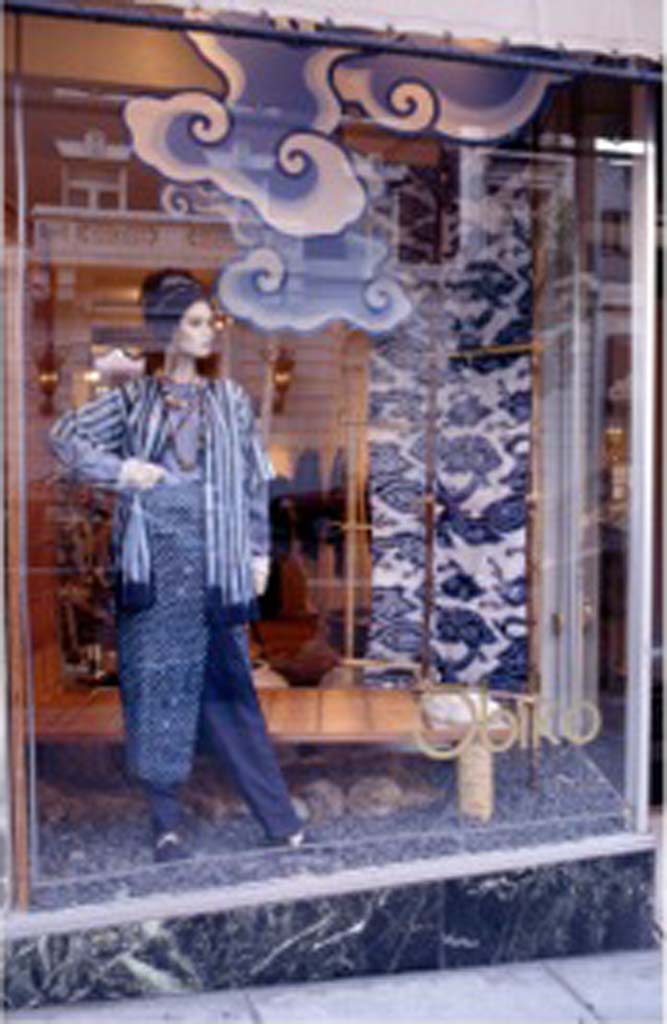
The Obiko boutique featured avant-garde window displays, usually created by Kaisik Wong, that never failed to catch the eye of people passing by.
794 Sutter Street
San Francisco, CA