Showing posts with label Claude Debussy. Show all posts

August 3, 2019

20,000 vinyl LPs 193: Roman Ryterband ~ Chamber Music

~
 
Roman Ryterband ~ Chamber Music
vinyl LP front cover detail
sketch by Rodolfo Dei
detail photo by Styrous®
         

Yesterday was the birthday of the Polish composer, Roman Ryterband who was born in Łódź, Poland on 2 August, 1914, to a well to do family of lawyers and musicians. By the age of 12, he was composing music and was encouraged by Alexander Glazunov to pursue a musical career; he performed as a pianist in Łódź and Warsaw during the mid-1930s.           


vinyl LP front cover
sketch by Rodolfo Dei
photo by Styrous®


Touring Western Europe on the eve of World War II, Ryterband was able to board the last train to Switzerland, where he took refuge and worked as a manual laborer alongside other wartime foreigners interned on Swiss territory until the mid-1950s. Except for his sister and her son, his entire family perished in the Holocaust.         

He completed his PhD studies of musicology at the University of Berne, indulging his passion for studying different languages and cultures, and conducting an extensive research of Slavic, Swiss, Italian, Brazilian, Indian, and Negro folk music traditions. They inspired Ryterband to write a number of works utilizing various native idioms as well as author and deliver numerous lectures and articles on indigenous music traditions throughout his life. 


vinyl LP back cover
photo by Styrous®
 

His music represents a cross-pollination of early twentieth century modernists like Debussy and Britten with folk elements present in the works of Bartok, Copland, or Kodaly. Although his career as a composer began with a few short piano works and some popular songs in Poland in the late 1930s, Ryterband came into his own during the World War II years spent in Switzerland. There he completed several large-scale solo piano cycles (24 Variations on a Folk Song, Suite Polonaise, and Three Preludes) and a number of solo and chamber works for harp (Two Images, Sonata for Harp and Two Flutes, Sonata breve and Trois Ballades Hébraïques), as well as many vocal works, choral cantatas and compositions for saxophone and piano.        


Trois Ballades Hébraïques sheet music


Almost forty years after his death, Ryterband’s music remains largely unknown, especially in his native Poland, perhaps because he spent most of his creative life abroad.       

Although most of his catalog is represented by chamber music (often in interesting combinations of instruments), Ryterband also penned a few large-scale orchestral works, including Jubilate Deo for soloists, orchestra, organ and men’s and boys’ choirs (1949), symphonic poems Vida Heroica (1953) and Russian Rhapsody (1962), as well as orchestral ballet music Tableaux of Laguna (1976) and Heracles and the Argonauts (1978).


Folk and religious music add further diversity to Roman Ryterband’s opus with such entries as Three Hebrew Songs for voice and piano (1938), Song of the Slavonic Plains for violin and piano (1944), Rhapsodia helvetica for trombone and piano (1948), and several songs based on Negro spirituals (The Gospel’s Mah Religion, Yo’ Serbant, So Sing—So Play, Trusty Jim), as well as a number of psalm settings (Pray for the Peace of Jerusalem, Raise Your Heads, O Gates) and settings of traditional texts and poetry in Hebrew, Polish, French and German.      


vinyl LP back cover detail
detail photo by Styrous®
 
    
The winner of several awards, including the First Prize at ISCM Chicago in 1961 for Piece sans titre for two flutes, Ryterband also received the Kosciuszko Foundation 1977 Award and a grant from the National Endowment of the Humanities for a work celebrating American Bicentennial celebrations in 1976.            


vinyl LP label, side 1
photo by Styrous®


vinyl LP label, side 2
photo by Styrous®
 
      
Tracklist:

Side 1: 23:16

Sonata Breve for vionlin & harp - 10:02
1 - Allegro agitato 3:03
2 - Adagio pastorale, poi passionato - 3:20
      Vivo e scherzoso - Adagio - 3:39
    Elemér Glanz - Violin, Eva Kauffungen - Harp

3 - Pièce sans Titre for Two Flutes alone - 3:56
    Alexander Magnin, Geoges Guéneux - flutes

    Deux Sonnets for Contralto, Flute & Harp - 9:18
4 - Eroica - 4:43
5 - La Perle 4:45
    Lyn Vernon - Mezzo-Soprano, Alexandre Magnin - Flute, Eva Kauffungen - Harp

Side 2: 20:11

Trois Ballades Hébraïques for Violin & Piano - 11:56
1 - Le Rêveur - 4:19
2 - La Maître Joyeus - 2:35
3 - Berceuse - 5:02
    Elemér Glanz - Violin, Boris Mersson - Piano

    Suite Polonaise for Piano (Three excerpts) - 8:55
4 - Drobny - 3:07
5 - Krakowiak - 2:35
6 - Oberek 3:13
    Boris Mersson - Piano   
    
Roman Ryterband ~ Chamber Music
Label: Orion Sound, ORS 74167 Stereo
Format: Vinyl, LP, Album
Country: US


Viewfinder links:           
           
Béla Bartók       
Benjamin Britten      
Claude Debussy         
Alexander Glazunov        
  
Net links:           

Polish Music Center ~ Roman Ryterband     
UCR ~ Talents Revealed in Composer's Concert         
      
YouTube links:           
      
Roman Ryterband ~            
          3 Ballades hébraïques: No. 1. Le Reveur   
          3 Ballades hébraïques: No. 2. Le Maitre Joyeux      
          3 Ballades hébraïques: No. 3. Berceuse                   
          Le Maître Joyeux for violin & harp  
          Sonata breve: I. Allegro agitato       
          Sonata breve: II. Adagio Pastorale - Poi Passionato      


Styrous® ~ Saturday, August 3, 2019            


October 1, 2018

Paul Dukas, The Sorcerer & Mickey Mouse

~
Today, October 1, is the birthday of Paul Dukas, the French composer, critic, scholar and teacher.

Next month, on November 18, Mickey Mouse turns ninety. What on earth do they have in common you might ask.      


The Sorcerer's Apprentice (L'apprenti sorcier), by Dukas, was instrumental in elevating Mickey Mouse to classical music stardom. In the mouse's honor there will be two blogs on his birthday that have been fun to research.        

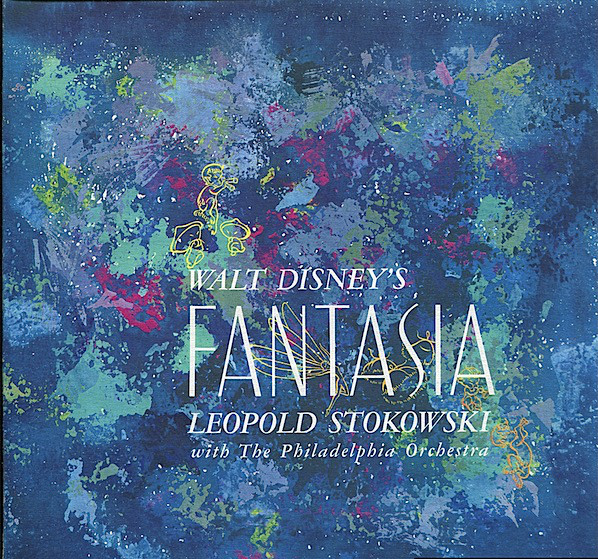
Although The Sorcerer's Apprentice, the work Dukas is most known for, was already a popular concert piece, it was brought to a much vaster audience through its inclusion in the 1940 Walt Disney animated concert film Fantasia, in which Mickey Mouse plays the role of the apprentice. Disney had acquired the music rights in 1937 when he planned to release a separate Mickey Mouse film, which, at the suggestion of Leopold Stokowski, was eventually expanded into Fantasia (link below).    


Mickey Mouse as the Apprentice


Stokowski's version for the soundtrack of Fantasia remains one of the most famous interpretations of the work. Although too early for high fidelity, the performance was recorded using multi-tracks and was the first use of stereophonic sound in a film. It is the only part of the film for which Stokowski conducted a studio orchestra, rather than the Philadelphia Orchestra. The New York Times and Variety gave it rave reviews when it premiered on November 14, 1940 at the Broadway Theater (links below).    

In terms of the story-line of the film, the sorcerer's final anger with his apprentice which appears in Fantasia does not appear in the Johann Wolfgang von Goethe poem, Der Zauberlehrling, which was the basis for the tone poem.         


Dukas was born in Paris in 1865. His father, Jules Dukas, was a banker, and his mother, Eugénie, was a pianist. His mother died when he was five years old. He took piano lessons, but showed no unusual musical talent until he was 14 when he began to compose while recovering from an illness. He entered the Conservatoire de Paris at the end of 1881, aged 16, and studied piano with Georges Mathias, harmony with Théodore Dubois and composition with Ernest Guiraud. Among his fellow students was Claude Debussy, with whom Dukas formed a close friendship.


Dukas's teachers, Georges Mathias (top l.), Théodore Dubois (top r.) 
Ernest Guiraud (bottom l.), Dukas's fellow student Claude Debussy
 

Two early overtures survive from this period, Goetz de Berlichingen (1883) and Le Roi Lear (1883). The manuscript of the latter was rediscovered in the 1990s and the work was performed for the first time in 1995.

In the decade after L'apprenti sorcier, Dukas completed two complex and technically demanding large-scale works for solo piano: the Piano Sonata (1901), dedicated to Saint-Saëns, and Variations, Interlude and Finale on a Theme by Rameau (1902). His last major work was the sumptuous oriental ballet La Péri (1912). Described by the composer as a "poème dansé".  


Costume design by Léon Bakst for Dukas's La Péri - 1922 


Dukas was a perfectionist and destroyed many of his pieces out of dissatisfaction with them. Only a few of his compositions remain.  

In 1920, he became a member of the Royal Academy of Science, Letters and Fine Arts of Belgium. He was appointed professor of composition at the Paris Conservatoire in 1927. He also taught at the École Normale de Musique in Paris.          

In the last years of his life, Dukas became well known as a teacher of composition. His students included Jehan Alain, Elsa Barraine, Yvonne Desportes, Francis Chagrin, Carlos Chávez, Maurice Duruflé, Georges Hugon, Jean Langlais, Olivier Messiaen, Manuel Ponce, Joaquín Rodrigo, David Van Vactor and Xian Xinghai.


Paul Dukas & students, Paris Conservatoire, 1929 
Olivier Messiaen, extreme right; Maurice Duruflé next to him

    
Paul Dukas died in 1935, he was 69 years old. He was cremated and his ashes were placed in the columbarium at Père Lachaise Cemetery in Paris.       


Viewfinder links: 
       
Claude Debussy       
Camille Saint-Saëns     
     
Net links:        

Paul Dukas works     
NY Times ~  
     Fantasia, an Exciting New Departure in Film Entertainment  
Variety ~ Fantasia            
Smithsonian ~ Fantasia was a Critical and Box-Office Failure      
Encyclopædia Britannica  ~ Fantasia       
Disneyland Fan Club ~ 15 Fascinating Facts About Fantasia      
      
YouTube links:        

Leopold Stokowski (with the Philadelphia Orchestra) ~   
                The Sorcerer's Apprentice (Fantasia film)          


"Always remember that it [music] 
should be written from the heart and not with the head." 
                          ~ Paul Dukas


Styrous® ~ Monday, October 1, 2018     


March 7, 2018

Maurice Ravel ~ Escalera á Lenin

~


Today is the birthday of composer Maurice Ravel 


photographer unknown


He was born, Joseph Maurice Ravel (French: [ʒozɛf mɔʁis ʁavɛl]) on March 7, 1875. He was a French composer, pianist and conductor. He is often associated with impressionism along with his elder contemporary Claude Debussy, although both composers rejected the term. In the 1920s and 1930s Ravel was internationally regarded as France's greatest living composer.     

My favorite work by him is the Pavane pour une infante défunte (Pavane for a Dead Infanta). It was originally written for solo piano in 1899 when he was studying composition at the Conservatoire de Paris under Gabriel Fauré. There is a recording from a piano roll of Ravel playing it on YouTube (link below). He also published an orchestrated version of the Pavane in 1910; it is scored for two flutes, oboe, two clarinets (in B-flat), two bassoons, two horns, harp, and strings. A typical performance of the piece lasts between six and seven minutes. It is a very melancholy, slow and incredibly beautiful piece of music (link below).  

However, it is his Bolero that has become the first thing that pops into the mind of people when they think of his music. That's too bad as his work was massive; it included chamber music, symphonies, operas, ballets, choral works and many other forms (link below). 

Bolero is a one-movement orchestral work composed as a ballet commissioned by Russian actress and dancer Ida Rubinstein which premiered in 1928. It was one of the last pieces Ravel composed before illness forced him into retirement.     

While on vacation at St Jean-de-Luz, Ravel went to the piano and played a melody with one finger to his friend Gustave Samazeuilh, saying "Don't you think this theme has an insistent quality? I'm going to try and repeat it a number of times without any development, gradually increasing the orchestra as best I can." It was initially called Fandango, but its title was changed to "Boléro". According to Idries Shah, the main melody is adapted from a melody composed for and used in Sufi training.  
     
I think of Bolero, as the first real piece of Disco; the endless repetition of a simple music motif. A story I once heard was it was composed when Ravel spent a night in a hotel next to a sawmill; NOT true but makes for a great urban legend and I like it. As it is his most famous musical composition, his "trademark", I have decided to concentrate on it with an interesting film interpretation that utilized it.   
       
The 1990 film entitled, The Orchestra (YouTube link below), was conceived and directed by Zbig Rybczynski who won the 1982 Academy Award for Best Animated Short Film for Tango. There were several segments to the film, Chopin Schubert, Mozart, Rossini and the last one, Ravel, was entitled, Escalera á Lenin (Vimeo link below).     


photographer unknown

The segment is a musical interpretation of a political theme: Communism. Communism progressed one level at a time, but never got anywhere in the end, never reaching the mountain top. It portrays how communism failed to progress from one level to the next, always stuck on the same staircase (the segment was shot using one VERY long set of stairs with landings on the way). The actors do not go up to the next level of stairs but stop when they reach the top of the level they are on. A new set of performers takes over and the camera provides the illusion of progress but there is none, just endless repetition until the final collapse. The concept is brilliant!    

The music, Ravel's Bolero, was performed by the RIAS Symphony Orchestra, Berlin, conducted by Ferenc Fricsay. The film was produced by Stuart L. Weiss. The costumes were designed by Ed Falco and the computer designs were by Tara Brooke Weiss. The featured performers in the Bolero segment were Rafal Ney-Jaskulski, Meryl Newbern, Anatol Glushko and Drew Dix. The film was shot at The Zbig Vision Sgtudios in Hoboken, New Jersey. 


Ravel epilogue

In October 1932, Ravel suffered a blow to the head in a taxi accident. The injury was not thought serious at the time, but in a study for the British Medical Journal in 1988 the neurologist R. A. Henson concludes that it may have exacerbated an existing cerebral condition. In 1937, Ravel began to suffer pain from his condition, and was examined by Clovis Vincent, a well-known Paris neurosurgeon. Vincent advised surgical treatment. He thought a tumour unlikely, and expected to find ventricular dilatation that surgery might prevent from progressing. Ravel's brother Edouard accepted this advice; as Henson comments, the patient was in no state to express a considered view. After the operation there seemed to be an improvement in his condition, but it was short-lived, and he soon lapsed into a coma. He died on December 28, at the age of 62.     


for classical and fingerstyle guitar 


Viewfinder links:    
    
Wolfgang Amadeus Mozart articles/mentions 
Maurice Ravel articles/mentions    
Gioachino Rossini articles/mentions       
     
Net links:    
     
Music of Ravel
Zbigniew Rybczyński      
        
YouTube & Vimeo links:    
     
RIAS Symphony Orchestra, Berlin ~ Escalera a Lenin 14 min. ,15 sec.    
The Orchestra (complete) 57 min., 14 sec.           
The Making of Zbig's "The Orchestra" 25 min., 03 sec.             
Pavane pour une infante défunte solo piano by Ravel      
Pavane pour une infante défunte orchestral version       


"The only love affair I have ever had was with music" 
                        ~ Maurice Ravel


Styrous® ~ Wednesday, March 7, 2018